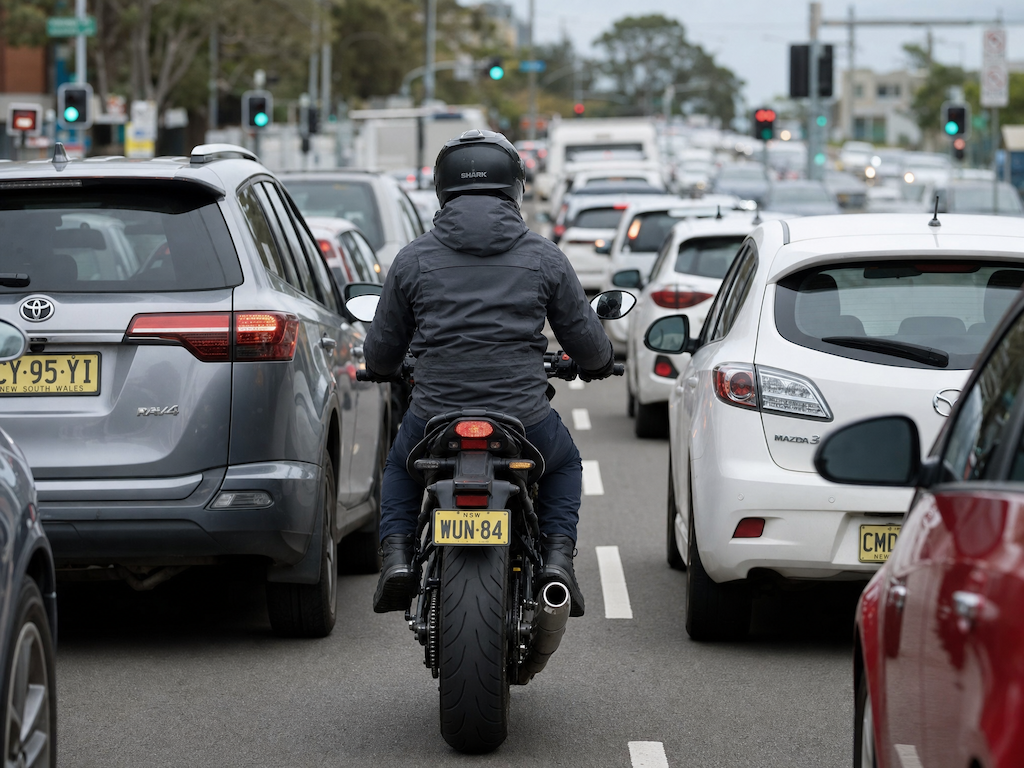
Navigating New South Wales’ heavy peak traffic on a motorcycle requires a level of agility that most drivers don’t need to worry about. Lane filtering is perhaps one of the most practical examples of motorcycle agility. Despite being a regular occurrence on NSW roads, filtering is largely misunderstood. In the event of an accident as a result of filtering, other motorists and insurers point fingers, but they’re operating under the false assumption that the motorbike is automatically at fault.
Under New South Wales law, the reality is nuanced. If you were injured in a lane filtering accident, your right to compensation isn’t void. It starts with determining lane filtering accident liability NSW, and that heavily depends on the facts of the collision, which road rules apply and how, and what evidence is available to prove it.
Is Lane Filtering Legal in NSW?
Yes. Lane filtering is a legal practice in NSW, but it’s also strictly regulated. Fully licensed motorcyclists are allowed to filter between stationary or slow-moving traffic. However, it is subject to specific conditions. It’s worth noting that while lane filtering is permitted at speeds of 30km/h or less, anything over 30km/h is classified as lane splitting and is illegal. So, how do you stay on the right side of the law?
- You must hold a full motorcycle license.
- Traffic must be at a standstill or moving slowly in the same direction.
- You must maintain a speed of 30km/h or lower.
- Lane filtering is prohibited next to parked vehicles, in bicycle lanes, next to the kerb, and in school zones while school is in session.
Lane filtering is allowed, but it’s under strict and specific conditions. It’s worth regularly checking road rules for updates to ensure you are riding safely. Ultimately, licensed motorcyclists are legally allowed to use the space between lanes as long as they are following the rules.
How Liability is Assessed in Lane Filtering Accidents
The liability process is quite straightforward in lane filtering accidents, and insurers will carefully evaluate key information to determine who was at fault.
The first consideration is whether the lane filtering was legal. Was the motorcyclist operating within filtering laws? As long as the rider was adhering to the speed and traffic was at a stop or slow-moving, showing you were compliant with the law will support your position.
The second is related to other drivers. The majority of filtering accidents are the result of unpredictable car driver behaviour. They fail to look before changing lanes or without signalling, which can lead cars into the path of a motorcyclist who is legally lane filtering. In these situations, it’s the driver who takes the brunt of the blame.
Finally, if there is CCTV, fash cam, or helmet camera footage, it will be reviewed from every angle in a bid to determine fault. Accidents happen so quickly, and as important as the witness statements and police reports will be, video footage provides all the details from vehicle speed, lane positioning, indicating usage, and road conditions. It can provide a complete and accurate timeline of the events.
Common Misconception: Filtering Doesn’t Automatically Mean You’re at Fault
Sadly, this misconception has travelled so far and wide that it’s a common myth among motorists and motorcyclists. You do not lose your right to file a CTP claim if you were filtering during an accident. Even if you were partially to blame for the accident, you may still be able to file a compensation claim. Your payout will be adjusted to reflect your burden of responsibility. For example, if the investigation finds the fault was 75% with the car driver and 25% with the motorcyclist, both can file a CTP claim, and it will be reduced by the percentage of your fault.
What To Do After a Filtering-Related Accident
If you are involved in a motor vehicle accident while lane filtering, your immediate actions can influence the success of your claim.
- Always seek medical attention first because adrenaline may be masking serious underlying injuries, and obtaining a full medical assessment early is a must.
- If safe, try to document the exact conditions of the traffic. Was it heavily congested? Were motorists creeping forward at a light, or were they at a complete stop? As much detail as you can remember.
- If you have a dash or helmet cam, download the raw footage and save it to a secure device. Do not delete it or risk overwriting.
- You need a Police Event Number and a copy of the accident report, so if the accident wasn’t severe enough to call them to the scene, ensure you report it online or in person within 28 days (a mandatory requirement for a CTP claim in NSW).
- Speak to a lawyer as early in the process as possible. You should never accept an insurer’s initial fault assessment; they often deny lane filtering claims early to reduce payouts.
How AJB Stevens Can Help
At AJB Stevens, we know the specific challenges NSW motorcyclists face within the insurance system. Our specialised motorcycle accident lawyers know how to undermine and counter unfair assumptions about riders and lane filtering. We can assist you in gathering evidence, interpreting data, and challenging the incorrect assignment of fault.
If you want to learn more about your legal rights or discuss recovery avenues following a lane filtering collision, reach out to AJB Stevens to schedule your free, confidential consultation.