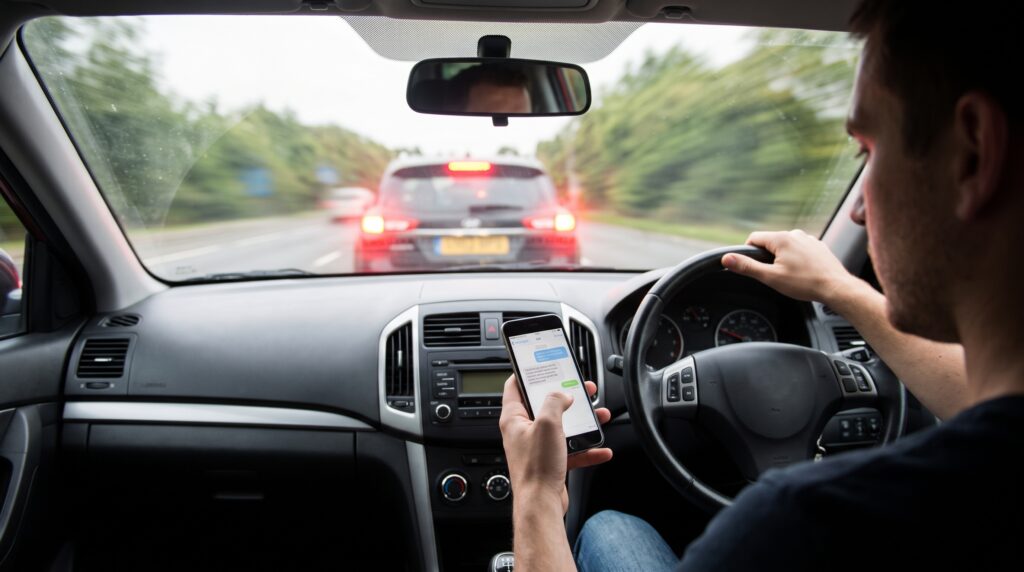
A glance at a phone can change a life. Distracted driving is a common cause of crashes on Sydney roads, from busy arterial routes to quiet suburban streets. If you were injured by a driver who was looking at their phone, you may be wondering whether that changes your claim.
The short answer is that you can often claim whether or not phone use is proven. But evidence of distraction can strengthen your position on who was at fault. This article explains the NSW phone rules, how the CTP scheme works, and what to do next.
What does NSW law say about phones and driving?
Under the Road Rules 2014 (NSW), drivers must not hold or use a mobile phone while the vehicle is moving, or stopped but not parked. A phone can only be used if it is secured in a cradle fixed to the vehicle, or connected through Bluetooth, and then only hands-free for functions such as calls, music and navigation. Learner, P1 and P2 drivers face much stricter rules, with only very limited exceptions.
The penalty is a fine and five demerit points, or ten demerit points during double demerit periods. Mobile phone detection cameras operate across NSW and can capture drivers using their phones.
Distraction is not limited to phones. Adjusting a screen, reaching for an object or looking away from the road for too long can also amount to careless driving.
Can I still claim if the other driver was on their phone?
Yes. If you were injured in a motor accident in NSW, you can generally claim statutory benefits through the CTP scheme regardless of who was at fault. These benefits can include treatment, care, and weekly payments for lost income. For accidents on or after 1 April 2023, they are available for at least the first 52 weeks, even if you were partly or mostly at fault.
After 52 weeks, entitlements generally depend on two things.
- Whether your injury is a threshold injury, such as a soft tissue injury or minor psychological injury.
- Whether you were wholly or mostly at fault, meaning you are more than 61 per cent responsible.
Lump sum compensation, called damages, works differently. You generally need to show that another person’s negligence caused your injuries, and proof that the other driver was using a phone can be powerful evidence of carelessness. Damages claims also have extra requirements, including a threshold of more than 10 per cent whole person impairment for pain and suffering.
How is phone use proven?
- The police report and any fine issued to the other driver
- Images from mobile phone detection cameras, where available
- Dashcam footage and CCTV from nearby shops or traffic cameras
- Statements from independent witnesses
- Phone records, such as call, message or data logs
- Vehicle data from infotainment or telematics systems.
These records are not kept forever. Camera and telecommunications data can be deleted over time, so raise the issue early. A lawyer can ask for records to be preserved and, where appropriate, seek them through formal legal processes.
Common mistakes to avoid
- Admitting fault at the scene, even out of politeness
- Delaying medical care, which can make injuries harder to link to the crash
- Posting about the crash or your recovery on social media
- Accepting an insurer’s early decision on fault without advice
- Missing a time limit
Time limits that matter
- Police: if police did not attend the scene, report the accident within 28 days.
- Statutory benefits: lodge your claim within 28 days to protect weekly payments back to the date of the accident. The final deadline is 3 months from the accident.
- Late claims: a claim made after 28 days but within 3 months may still be backdated if you have a full and satisfactory explanation for the delay.
- Damages: a claim for damages must generally be made within 3 years of the accident.
- These deadlines are strict, so speak with a lawyer as soon as you can.
Frequently asked questions
Does it matter if the other driver was fined for phone use?
A fine can support your claim, but it is not required. Insurers and courts look at all the available evidence.
What if I was also using my phone?
You may still be entitled to statutory benefits for the first 52 weeks. Your own conduct can affect findings on fault and the amount of compensation, so it is important to be honest with your lawyer from the start.
Can passengers, pedestrians and cyclists claim?
Yes. Almost anyone injured in a motor accident in NSW may be able to claim, including passengers, pedestrians and cyclists.
Do I need a lawyer to make a CTP claim?
You can lodge a claim yourself, but disputes about fault, injury type and entitlements can be complex. Early advice can help you avoid costly mistakes.
How AJB Stevens can help distracted driving accident claim NSW
Our experienced motor accident lawyers can gather evidence early, deal with the insurer for you, and explain your options in plain English. Our Resolution Plus+ claims management system will keep your matter moving and keep you informed at every stage.
Speak with the team at AJB Stevens today for a free initial consultation and tailored advice for your circumstances.
This article provides general information only and is not legal advice. Every situation is different, so please speak with a lawyer about your circumstances.