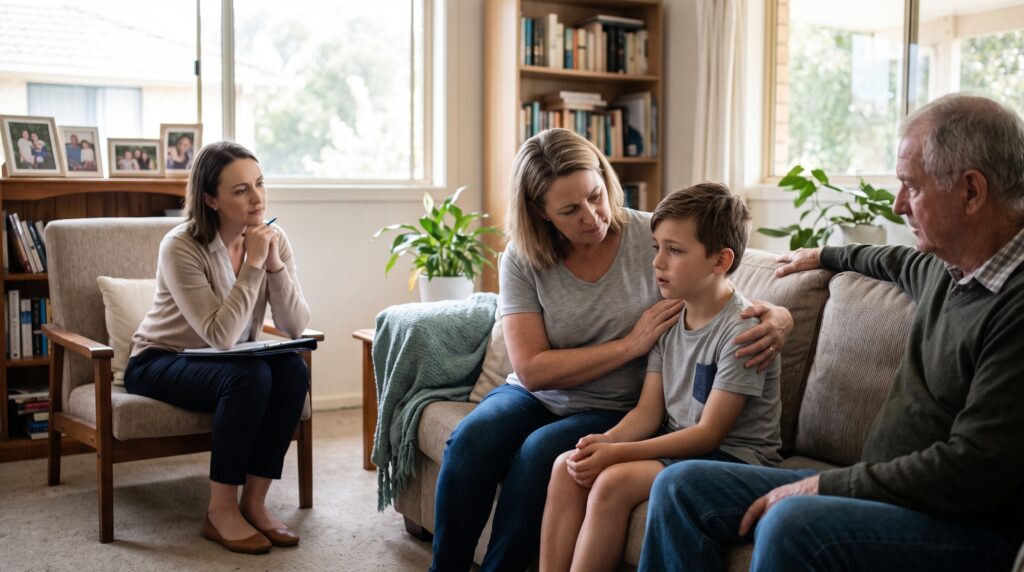
Blended families are common in NSW. Many people share a home with a new partner, stepchildren and children from a prior relationship. Love and good intentions often sit alongside unanswered questions about money and property.
When someone dies, those questions can turn into disputes. This article explains how NSW law treats blended families, where problems commonly arise, and what you can do to protect the people you care about.
Why are blended families more likely to face estate disputes?
Different people can have competing, and reasonable, expectations. A new partner may expect to stay in the family home. Children from an earlier relationship may expect to inherit what their parent built up before the new relationship. Stepchildren may have been raised as part of the family but have no automatic legal rights.
When these expectations are not clearly recorded, the law steps in. The result may not match anyone’s assumptions.
What happens if there is no will?
If someone dies without a valid will in NSW, the Succession Act 2006 decides who inherits. If the person leaves a spouse, including a de facto or registered partner, and children from an earlier relationship, the partner does not simply take everything.
In that situation, the surviving partner generally receives the personal effects, a statutory legacy set by law and adjusted over time, and half of what remains. The deceased’s children share the other half. In smaller estates, the statutory legacy may use up most or all of the estate.
Stepchildren do not inherit under these rules.
Do stepchildren have any rights?
Stepchildren cannot automatically challenge a will in NSW. A stepchild may be able to make a family provision claim if they were wholly or partly dependent on the deceased and members of the same household at some point. They must also show factors that warrant the court making an order.
Claims must generally be started within 12 months of the date of death.
Common pitfalls in blended family estates
- An old will that was never updated. Marriage generally cancels an earlier will, unless it was made in expectation of that marriage. Divorce cancels gifts to a former spouse, but not the whole will. Separation, or the end of a de facto relationship, does not cancel a will.
- Jointly owned property. A home owned as joint tenants passes to the surviving owner outside the will, so children from an earlier relationship may receive nothing from it.
- Superannuation. Death benefits are paid by the fund trustee and may not follow your will.
- Verbal promises. Promises about who gets what are hard to prove and may not be legally binding.
- Assets held in trusts or companies, which can make the picture more complicated.
A simple example
Imagine Maria and David marry later in life. Each has adult children from an earlier relationship. They own their home as joint tenants, and each has a simple will leaving everything to the other. When David dies, the home passes to Maria automatically, and his will gives her everything else. David’s children receive nothing, even though they may have expected a share.
David’s children may be eligible persons who can ask the court to consider a family provision claim, but the success of a claim depends on many factors, including their needs and the size of the estate. With clear planning and open conversations, the family could have avoided much of the uncertainty.
Can the court look at assets outside the will?
In family provision cases, the Supreme Court of NSW can make notional estate orders. In certain situations, these allow the court to treat some property that sits outside the estate as available to meet a claim. This is a complex area, and it is another reason to seek advice early.
Steps to reduce the risk of conflict
- Make or update your will after a marriage, separation, or the arrival of a new partner or stepchildren.
- Consider options such as a testamentary trust, or a right for your partner to live in the home with the home later passing to your children.
- Review asset ownership and who is named in your superannuation.
- Explain your decisions in writing. A clear statement can help later.
- Talk with your family where appropriate.
- Get advice from a lawyer experienced in estates and family law.
If you think you have been overlooked
Act early. The 12-month time limit is strict. A lawyer can assess eligibility, outline the evidence you need, and advise whether mediation might resolve the matter without a court hearing.
Frequently asked questions
Can my stepchildren inherit if I die without a will?
No. Stepchildren are not included in the NSW intestacy rules. If you want them to benefit, you need a valid will.
Does getting married cancel my will?
Generally, yes. Marriage cancels an earlier will unless it was made in expectation of that marriage. Review your will before you marry.
Does divorce cancel my whole will?
No. Divorce cancels gifts to your former spouse and any role you gave them as executor or trustee, but the rest of the will stays in place. Separation alone does not change your will.
How long do I have to make a family provision claim?
Generally, 12 months from the date of death. Late claims need the court’s permission and should not be relied on.
How AJB Stevens can help with a blended family inheritance dispute
AJB Stevens advises on both estate disputes and family law, so we understand how relationship changes affect wills, property and family dynamics. Our approach is practical, compassionate and focused on finding workable outcomes.
Whether you are planning or dealing with an estate that has left you with questions, contact AJB Stevens for a free initial consultation and tailored advice.
This article provides general information only and is not legal advice. Every situation is different, so please speak with a lawyer about your circumstances.