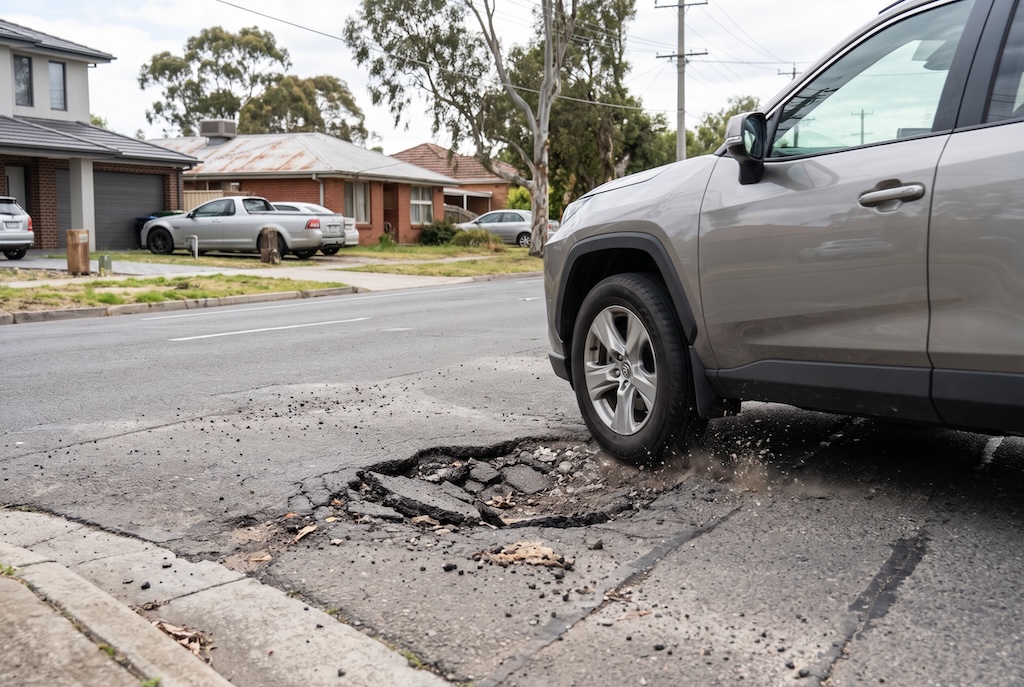
A motorcycle crash does not need another vehicle to cause serious injury. A pothole, an uneven road edge, loose gravel, or an oil spill can unsettle a bike in an instant, and a rider has far less protection than a car driver.
If you were hurt in a crash that involved no other vehicle, you may assume there is nobody to claim against. In NSW, that is not always the case. This article explains what claims may be available, who might be responsible, and the legal hurdles to expect.
What causes single-vehicle motorcycle crashes?
Road conditions are a common factor. Examples include:
- Potholes, cracked surfaces and uneven road edges
- Loose gravel, mud or wet leaves
- Oil, diesel or other spills
- Missing or faded line markings and signs
- Poorly managed roadworks
- Debris or animals on the road
Not every crash is caused by the road. Mechanical faults, weather, speed and rider error can all play a part. Determining what actually caused your crash is one of the first jobs in any claim.
Two different types of claim
After a single vehicle crash, there are usually two separate questions.
1. CTP statutory benefits
In NSW, riders injured in a motor accident can generally claim statutory benefits through the CTP scheme, even when no other vehicle was involved. These benefits can include treatment and care and weekly payments for lost income, and they do not depend on proving who was at fault.
For accidents on or after 1 April 2023, benefits are available for at least the first 52 weeks. After that, entitlements generally depend on whether you have a threshold injury, such as a soft tissue injury, or whether you were wholly or mostly at fault, meaning more than 61 per cent responsible.
2. A claim against whoever was responsible
If someone else’s negligence caused your crash, you may be able to claim compensation from them. Depending on the facts, that could be a council, Transport for NSW, a roadworks contractor, or a person responsible for a spill or hazard. You must prove negligence, which is where the legal hurdles arise.
Who looks after the road?
Councils typically look after local roads. Transport for NSW generally handles state roads, including many main routes and highways. Contractors carrying out roadworks may also have responsibilities. Working out who was responsible for the exact spot where you crashed is an important early step, and a lawyer can help.
The legal hurdles with road authorities
Road authorities are not automatically liable because a road was imperfect. Under the Civil Liability Act 2002 (NSW), courts consider an authority’s resources, other priorities, and general responsibilities when deciding whether it acted reasonably.
Road authorities have additional protection. Under section 45 of the Act, an authority is generally not liable for failing to carry out road work, or to consider carrying out road work, unless it had actual knowledge of the particular risk that caused the harm. Courts have taken a narrow view of what counts as actual knowledge.
This is why evidence of what the authority knew matters. Earlier complaints, repair requests, inspection records, and previous crashes at the same spot may all matter. A lawyer can request council records through formal information requests.
What evidence can help?
- Photos and video of the defect from several angles, with something for scale such as a coin or tape measure
- The exact location, ideally a GPS pin or street address, plus the date and time
- Photos of marks on the road and damage to your bike, helmet, and gear
- Helmet camera or dashcam footage, if you have it
- Names and contact details of witnesses
- The police report, if police attended
- Medical records from your first visit onward
- Notes on weather, lighting and traffic
Keep your bike in its current condition if you can. An independent inspection can help show whether the crash was due to the road or a mechanical fault.
How your own riding can affect a claim
Insurers and courts look at the whole picture, including speed, whether you could reasonably have seen the hazard, and your protective gear and licence. If a rider is found partly responsible, compensation can be reduced. If a rider is found wholly or mostly at fault, CTP statutory benefits generally end after the first 52 weeks. Each case turns on its own facts.
Time limits that matter
- Police: if police did not attend the scene, report the accident within 28 days.
- Statutory benefits: lodge your CTP claim within 28 days to protect weekly payments back to the date of the accident. The final deadline is 3 months from the accident.
- Claims against a road authority or other party: the general time limit is often three years, but shorter or different limits can apply. Do not wait.
A minimum-severity Threshold also applies to compensation for pain and suffering. A lawyer can explain which rules apply to your claim.
What to do after a crash
- Get medical help, even if your injuries seem minor at first.
- Photograph the scene and the hazard before anything changes.
- Report the incident to the council or Transport for NSW and to police.
- Keep your bike, helmet and gear as they are.
- Keep records of costs and time off work.
- Speak with a lawyer before giving a recorded statement or signing anything.
Frequently asked questions
Can I claim if I hit a pothole and no other vehicle was involved?
Possibly. You may be able to claim CTP statutory benefits, and you may also have a claim against the responsible authority if its negligence caused the crash. There are legal hurdles, so early advice is important.
Will the council automatically pay compensation?
No. Councils and other road authorities are not automatically liable. You will need to prove negligence and overcome the Civil Liability Act protections extended to them.
Does CTP cover damage to my motorcycle?
No. CTP covers injury, not property damage. Check whether you have comprehensive insurance for the bike.
What if I was speeding or not wearing full protective gear?
You may still be able to claim, but your compensation may be reduced, and your fault can affect CTP benefits after the first 52 weeks.
Do I have to report the crash to the council?
There is no general rule that you must report it before claiming, but reporting promptly creates a record and helps protect other riders.
How AJB Stevens can help with a single vehicle motorcycle accident claim NSW
Our experienced motorcycle accident lawyers understand both CTP claims and claims against road authorities, and we can work out which paths suit your situation. Our Resolution Plus+ claims management system is built to keep your matter moving and keep you informed.
Contact AJB Stevens for a free initial consultation. We will assess your situation and clearly explain your options.
This article provides general information only and is not legal advice. Every situation is different, so please speak with a lawyer about your circumstances.